

Welcome to the LUBEST’S blog
This blog presents news about the LUBEST project. Here you will find information about the project’s activities, workshops, publications, and resources produced during the research.
The main aim of this project is to understand the physico-chemical interactions between lubricants and functional S&T object components to facilitate decision-making on what to do with lubricants in this type of heritage depending on the operational state of the object (static or functional). Its results will provide museums and conservation professionals with evident-driven tools and protocols that ensure better conservation practices and more informed decision-making.
LUBEST’S methodology
It is better to preserve, remove or replace the lubricant from the S&T objects, depending on their working regime? How LUBEST will answer this question💡?
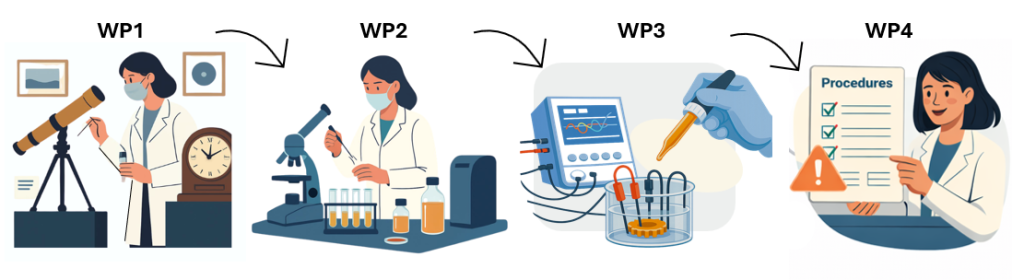
LUBEST addresses this challenge through an interdisciplinary approach, combining conservation, chemistry and engineering across the following work-packages:
▪️WP1 – In situ analysis: Objects are studied directly in S&T museums to identify the most representative alloys, operational mechanisms and lubricants used.
▪️WP2 – Lubricant characterisation: Samples of new and used lubricants used by the objects are analysed to determine their composition and how they age overtime.
▪️WP3 – Corrosion and wear assessment: the lubricant/metal interaction will be evaluated on the basis of electrochemical and tribological tests on coupons that simulate the parameters previously identified in the museums.
▪️WP4 – Development of action protocols: a decision tree will be created to assess deterioration risks linked to lubricants and whether to keep/conserve, remove, or replace them depending on the object’s working regime.
.
Project’s activities
- Visit to the Musée international d’horlogerie (MIH)
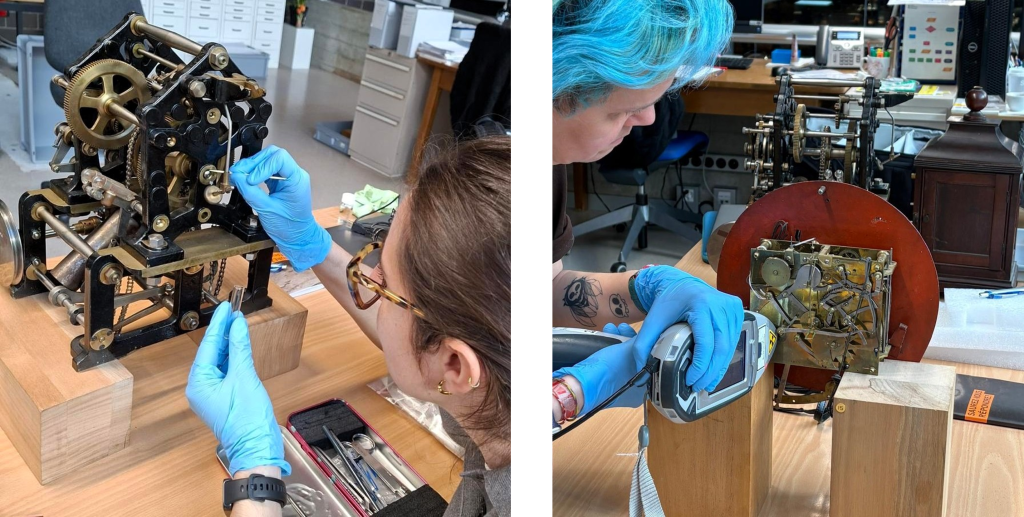
On 13 March 2026, Dr. Teresa Molina and Dr. Laura Brambilla visited our partner MIH in La Chaux-de-Fonds, to collect lubricant samples and analyse representative alloys from selected objects in the collection. The lubricants and their ageing process will be analysed soon.
- Visits to the Historic Military Equipment Foundation (HAM)


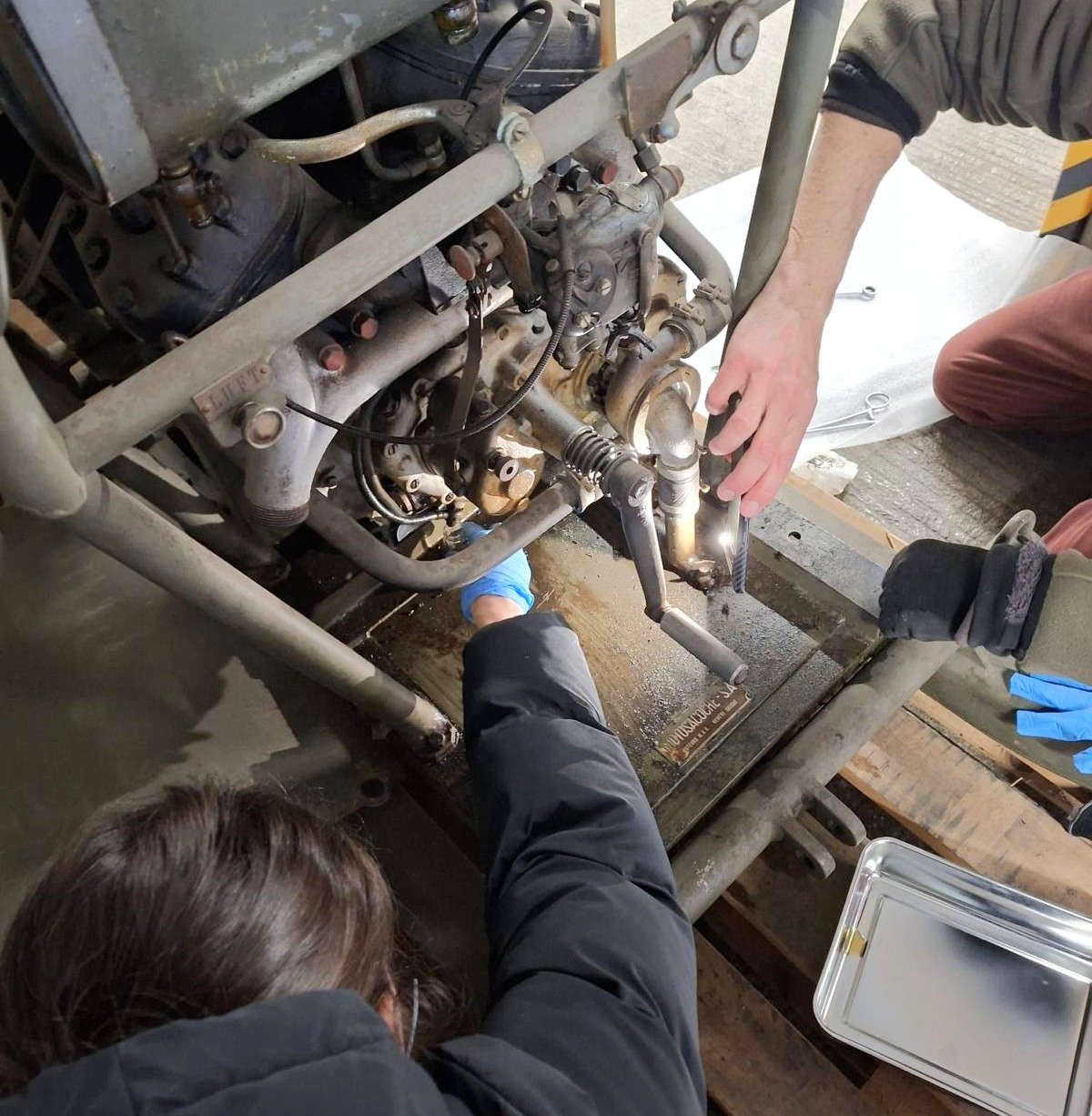
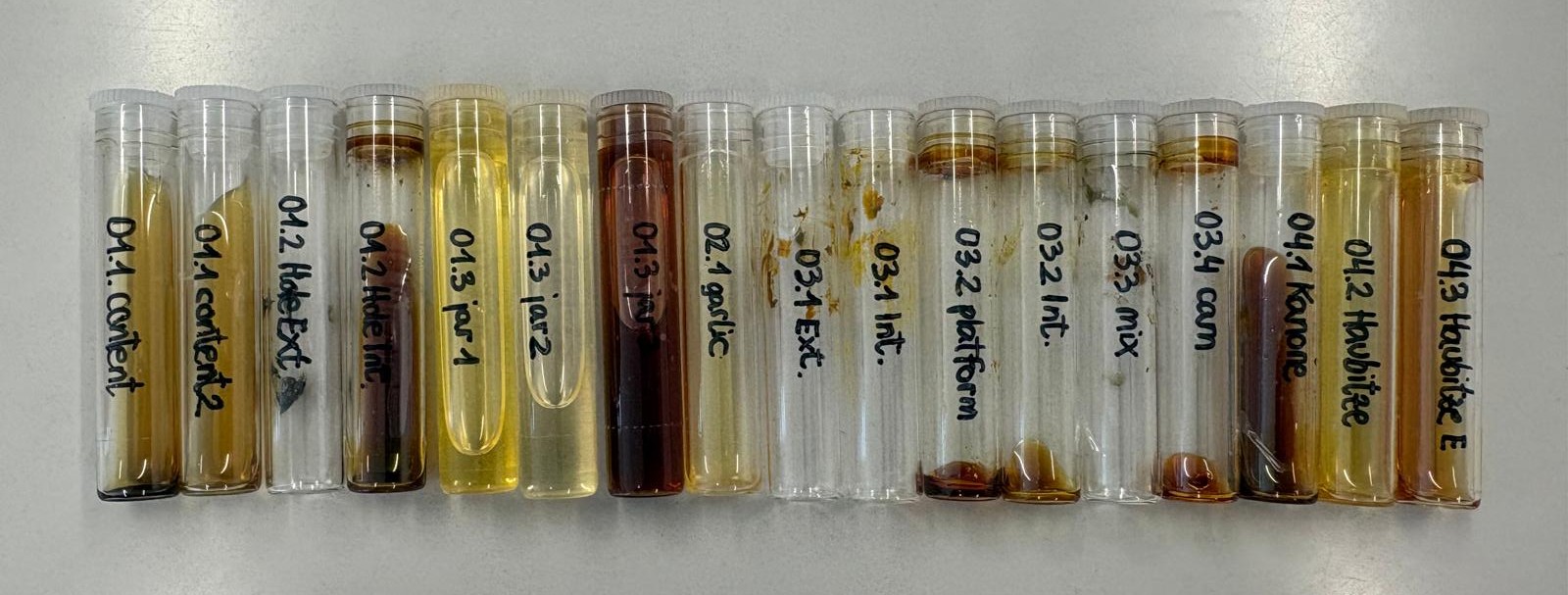
During March-April 2026, lubricant samples were taken from various objects from our partner HAM, based on their size, accessibility and relevance to the museum and the project. The different alloys used in the mechanisms were also characterised using XRF.
Conferences
• 24/02/2026: CR-UNCH seminar. « Lubrifiants dans le patrimoine scientifique et technique : préserver, éliminer ou remplacer ? » URL: https://www.he-arc.ch/agenda/cr-unch-lubest
• 09/09/2026: XLV Scientific Instrument Symposium (SIC2026). Oral presentations:
– María Teresa Molina, Anna Igual-Muñoz and Laura Brambilla. « Evaluation of lubricants for scientific-technical heritage. The LUBEST project »
– Louis Grua, Romain Jeanneret, Antonin Tarchini and María Teresa Molina. « Study and selection of suitable lubricants for semi-static scientific instrument: case study of a mechanical ballistic calculator from the HAM Foundation in Switzerland »